Series: Moses: A Journey From Bondage to Freedom
What's In a Name?
September 13, 2026 | Peter Rowan
Passage: Exodus 3:1-22
Summary
Moses and the burning bush is one of Scripture's most familiar stories, but three phrases at its heart carry life-changing weight. When God calls Moses by name, He is not simply locating him. He is saying that He knows the full story, including the pain, the failures, and the fears. When Moses asks who he is, God does not answer with a resume. He answers with His presence. And when God reveals His name, I AM, He is declaring that His character, His faithfulness, and His consistency are the foundation everything else rests on. The same God who saw Israel's affliction in Egypt sees yours today. His presence is not a supplement to your identity. It is the answer to the question itself.
Transcript
We pray, Lord, this passage that we have before us is so remarkably famous, known inside and outside Christian circles or Jewish circles. One of the great stories of your scriptures. And so, Lord, I pray that this morning we might hear it afresh anew. That we might love you more, that we might trust you more, that we might give ourselves to following you more. Having heard things, having wondered at your ways.
Men. I wonder if I need some new batteries. I don't know. It seems like it's going out, but I'm just going to talk. And if it goes out, I'll have to yell, maybe.
So what's in a name? I think I mentioned earlier with Peter's baptism that names in some ways do say who we are. They just identify us, but they often speak more than that, right? There's some names that speak especially more than that. I remember when Usain Bolt kind of shot onto the scene.
You know his famous. Like that guy, he was the only sprinter to win three consecutive.
Three consecutive Olympic gold medals in both the 100 meter and the 200 meter. He's the only one to ever have done that. He broke world records and then he broke his own world records. He won a total of eight gold medals and actually won a lot more of events in the world championships. Easily.
He's the most successful runner in history. And his name is Bolt. Of course it is, right? Maybe you know of the artist John Legend? I imagine you probably do.
Maybe you know that his name was actually John Roger Stevens, but some friends made fun of his voice. They said, you sound too much like the old guys. It sounds like you're mimicking. And he was like, I'm going to get somewhere. Renamed, gave himself officially a new last name legend.
And he's lived up to it. Names sometimes, sometimes it's true. Names reveal, right? They reveal. They reveal maybe who we hope to be, but maybe who we are.
Maybe who we're living into. I mentioned earlier that Jesus renames Simon Peter, right? The Rock. And while Peter certainly wasn't terribly solid in a lot of the gospel accounts, he's one of the great leaders of the early church. My own children have middle names that are family names.
We want them to remember where they've come from, what story they're living into and live in light of those stories, in many ways. James is James Kenneth. Kenneth is my dad's name. Henry Julius, which I will say is a remarkably noble name, but Julius is my father in law's name. And Lilius Catherine, which is Melissa's first name and her mom's first name and her grandmother's first name and her great grandmother's first name.
Telling a story.
We used to joke some. I haven't recently, but James is James, Kenneth and Melissa's maternal grandfather was an architect, and my dad was an architect and I'm a pastor. So James is bound to design churches. We'll see. If it happens, we'll see.
But what I'm suggesting is, in some ways, at least, names reveal, but they certainly set us up right. They give us a story, a background, in a way, and they set us up for a future. Some names like Hussein Bolt just fit. So today we're continuing this story or this series in the story of the life of Moses. Moses, sort of the narratives of the Exodus, the Exodus text.
And of course, it's not just about Moses. It's also about the people of God being brought from slavery, being brought out to God himself to worship him. But of course, much more than that. It's not just about Moses, not just about the people of Israel. It's about God.
It's a story about God. And of course, in some ways it begs the question, who's God? Right? What's going on? Who are we talking about?
Well, we're talking about the God who knows and who sees, right? Who sees and knows. Like that memory verse, the last verse in chapter two. It's about a God who acts, who saves, who redeems, who draws his people out to himself. And in some ways, that's again, what we're seeing this morning.
But we're seeing this God who reveals himself. And I want us to look at this famous chapter which is somewhat long, which was nice to kind of break it up and for you to hear different parts of it. But I want to consider it with these three phrases that we hear in this chapter. The first one is, here I am. The second one is who am I?
And the third one is I am. Okay, so here I am. So Moses is tending the sheep of his father in law. Actually, in chapter two, he's called Reuel, which means friend of God. So it seems as though Moses is marrying into a faithful family in some way, though they're Midianites.
And then here he's Jethro, but he's tending to somebody else's flock, and he's leading the flock. He's gone west from where they live, and he's gone to Mount Horeb, actually, in some ways prefiguring what's going to happen when Moses leads the flock of God west out from Egypt to Mount Sinai, because Mount Horeb and Mount Sinai are actually two names for the same place.
But it's in this kind of situation where he sees this bush that's being burned, but it's not being consumed. There's this fire that is present and sort of drawing his attention in. And he first he sort of looks at it and he goes, this is curious, right? And then he goes to it and he hears Moses. I love how Melisse read it, because I feel like the second Moses was even more intense.
Moses, Moses. Drawing him in, right? And his response, here I am. Here's where I am. And this little introduction.
Of course, we don't just have the location of Moses. We actually get a couple comments about his story. Even there. We have glimpses into where he's been. He's on Mount Horah because he's shepherding, right?
He's looking for a new place to tend to the flock. It's picking up after the end of the last chapter where we read that he was a sojourner, right? He named his son Gershom because he was a sojourner. So he wasn't really with his people. I mean, Moses is out in a place sort of that's unknown, not his homeland.
We know from elsewhere that he had lived 40 years, or from other passages that he had lived 40 years in Egypt and now he'd lived 40 years tending to his father's flock or his father in law's flock. But in those little phrases, even in the reality that Moses is elsewhere, we can actually remember back to the last chapter. We can think of the affliction and the burdens and all that were on God's people. And actually some of Moses own story, which was a story of defending the Israelites and then getting rejected by the Israelites, of killing an Egyptian and then being sought after to be killed by Pharaoh, the head Egyptian. What we can kind of remember in all of this, Moses simply being out in the middle of nowhere, is all of this suffering and all this sin that is in the past.
So when he says, here I am, it's not just here I am present here, but here's this. Here's me and this big story of myself and my people.
Of course, another interesting thing here is that this burning bush speaks and it speaks his name.
So it's his specific name that God knows.
The burning bush, we can say, knows him. The burning bush knows his story, his past, his pain, his fears, his doubts. Here I am. You know me. You see me.
Moses, Moses. And again, if we think Back in the last chapter, we know some of the background here of the naming of Moses, right? Moses, biological mother, probably with many tears, put him in that basket that she had daubed, right, with bitumen and pitch, placed him in in that basket, and placed that basket in the river, which was the place to which the baby boys were supposed to be thrown, to be killed. And yet she was seeking to save his life. And then Pharaoh's own daughter rescues him.
And it's in that context that we read that he was drawn out and he was called Moses because he was drawn out of the Nile. Actually, it's kind of interesting. There's some controversy over this naming of Moses because the Hebrew name Moshe means to draw out from. It's kind of like the word Exodus. Exodus means to go out the way out the way Exodus is the Greek words, the kind of the road out.
But in chapter 2, verse 10, what we read is she named him Moses because she said, I drew him out of the water. But the controversy is, who's the she there? What's going on here? I mean, it seems as though it should be Pharaoh's daughter, but there's no reason why Pharaoh's daughter would know Hebrew and also would name a little boy a Hebrew name. She would have raised him, of course, in her own.
Largely in her own family with the Egyptian customs.
And actually, kind of interestingly, the word mess or Moshe, Moses means one born or a child. That's what the he. So not just the Hebrew mean word means to drop, but the Egyptian word means child of. So it would have made sense that this princess would have said, oh, my child, mosu, mesu. But there's this kind of conflation.
Is it Hebrew, Is it Egyptian? And right there in itself, you're kind of wondering, oh, this is Moses story. He's kind of a sojourner. What is it? Who's the she?
Is it his sisters? That doesn't really make sense. Anyway, what I'm getting at here is that it's kind of a tricky thing that invites you into the story of Moses. His name itself is kind of inviting you into this conundrum that not only he finds himself in, but the whole people of Israel. And actually, beyond this, this is kind of interesting.
So the name, in the Egyptian name, Mesu or Mes, this idea of being born of a child, you can find actually in a lot of Hebrew or Egyptian names. Sorry, I'm confusing this. Let me give you a couple examples. There's a Pharaoh that we know who is named ah, Moseh. That means born of Ah, which was the moon God of the Egyptians.
There's an Egyptian name that we know, Kahmosa, which was named after the deified soul in Egyptian sort of deities, which is the God Ka. So you guys probably have heard of the pharaoh Tutmos, right? Mose. That's that same kind of name, Tut being one of the Egyptian gods again. So it's actually a pretty common name in Egypt, this kind of Mose, Moshe, Moses.
But it would always have had a suffix or, sorry, a prefix that said, what God you were born into. And yet Moses doesn't have it. So there's all this import that his story is being brought into this. Moses, Moses. But also this idea of there's no prefix.
It's the God who is right from the beginning, who tends to and takes care of Moses. Anyway, I think it's an interesting debate. I hope I didn't lose you. But Moses was drawn out. He was saved, he was rescued.
And then he's brought to this place in God's providence. He's brought to this very mountain that God will call him to bring the Egyptians to later on. Moses was just Moses. He wasn't the son of Ah or the son of Ka, or the son of Tut. But whose was he?
Whose was he? Which people did he belong to which God was caring for him? So he comes to the burning bush and twice, Moses, Moses. And I think in that, he's saying, I know your story, I know the story of your people, and I am the one who is your father intending to you. But who is this one who's calling him out?
Well, we're told in verse two that it's the angel of the Lord. In verse four, we're told that it was the Lord who he turned aside to see. And we know that this idea of the angel of the Lord is sort of present in the Bible, that sometimes God appears in an angelic form. Anyway, we know that that's kind of what's said. But what seems to be pretty clear, too, is that Moses isn't really sure what's going on.
He's just kind of checking it out. What's happening here? What is this that I see? And God is revealing himself as the fire that burns but is not consumed.
Maybe. I mean, Moses had been raised, remember, by the or he had been born into a Levite family, faithful family. Maybe he knew all the great stories of the Israelites. And he knew he could think back to Genesis 15 and the great story of God making his covenant with Abraham and how God went through the cut up animals as fire smoke. So he had this sense maybe there's something divine going on here.
Fire and smoke of course happen a lot more as God's presence in the book of Exodus alone actually there, Mount Horeb, Mount Sinai, Exodus 19, fire and smoke. You can think of the pillar of fire right later on in this very book. But you could also think of chapters 33 and 40 as God appearing in smoke. Anyway, if Moses was in doubt that this voice that spoke to him was the voice of God, what seems pretty clear is that it is. He says, come, you know, take your sandals off because where you're standing is holy.
Where you're standing is holy. We should say it's set apart. And the last time that we actually heard that word holy was all the way back in Genesis chapter one, about the seventh day. That was the last time it's holy. It's set apart for God.
So he would have maybe said, okay, there's something going on here, something happening here. This is divine. And what's happening is God saying, I want you to stay, right? Take off your sandals, stay. But also don't come too close.
In a way, understand that I am separate and yet I'm inviting you in. What we're seeing in all of this around Moses saying here I am, is that God is altogether other. He's the fire that can burn and not consume what he's burning. He's the sacred one, he's the holy one. And and yet he knows, invites him to be present to him.
He knows his story, he knows the story of his people. He's a God who is altogether distinct and beyond. And yet the God who is showing up, who is present in the here and now, he's revealing himself both in the burning bush, I think even very possibly in Moses own name as the God who exists and who exists outside of our realities, unlike the Egyptian God, but who comes into our stories and our realities and our place and our presence.
So God reveals himself and he says this, I'm the God of your father. Which is very interesting actually, because the next, the couple times that he also says something similar later on in the same chapter. He says, I'm the God of your fathers, Abraham, Isaac and Jacob. But here it's your father. He's saying, I know your story, specifically your father.
I know what's happening down in Egypt. He says, I'm the God of your father, the God of Abraham, the God of Isaac, the God of Jacob. He's the God who is. And who was, right? I'm the one who was.
I knew I'm the God of these other folk. He's the God of Moses, Father, the faithful Levite. He's the God of Abraham, Isaac and Jacob. So anyway, here's the. Here I am, right?
Moses standing before. Before God, before the burning bush. And the holy God being present to Moses, to this world, to this people. But the second phrase we have that I want us to consider, that kind of keeps this story going is when Moses says, who am I?
So when we turn to the second paragraph, we learn this reality again, that God is present to the world. This is actually kind of interesting. He says he sees the affliction of his people in Egypt. Verse 7. I've surely seen the affliction of my people who are in Egypt.
I've heard their cry because of their taskmasters. I know their sufferings. I've come down. I have come down to deliver them out of the hand of the Egyptians and to bring them up out of that land to a good and broad land. I don't know if you heard those sort of verbs there.
God sees. That's what it says. God hears, God knows, God comes, God brings. Which is really kind of interesting because there are some verbs that are in the past tense. I have, I've heard there's some that are in the present, there's some that are future oriented.
God's bringing his people out.
He's the God of their fathers, but he's also the God of their plight, then. And he will be the God that will be with them. He's the God of the past, but he's the God of the present. He's the God of the future. I think all this actually comes together in verse 9 and 10 more.
It says this and now, behold, the cry of the people of Israel has come to me, has come to me. And I have also seen the oppression with which the Egyptians oppressed them. Present, oppress them. Come, I will send you to Pharaoh that you may bring my people, the children of Israel, out of Egypt. The past, the present, the future, all contained right there.
So Moses asks, well, who am I? He asks, who am I that you should use me towards this end? But he says, who am I? And I think, of course, Moses could have thought back on his story and could have thought about how he was prepared in a unique way to be able to do some of this work. Maybe he could have thought about how he had these faithful Levite parents attended to him and cared for him, and that God was Divinely caring for him and all of that.
And how he was raised with the finest education in the land, right? Like the top Egyptian universities. How he learned, I don't know, the customs of, how do you go and speak to a pharaoh? He was the perfect person for it in a lot of ways, right? Maybe he's thinking back as he says, who am I?
He's like, well, there's some ways in which this might fit.
But he also knew as much as he knew these positive things. He knew likely all the negative things. He had killed an Egyptian pharaoh, had had it out for him. He sought to kill Moses, the Israelites themselves. When he sought to care for them, they rejected him, of course.
I think this invites us into our own stories where we can think of both the blessings that we have, but also all the doubts and all the fears that we have. Right? We kind of come before God and we're like, who are we? I know you have a story, maybe a plan in some ways, for my life, but I also look back and there's so much tragedy.
Who am I? I think is one of the great old questions that is as relevant today as it was long ago. It's one of the great questions on the journey of our life. There's a lot of times where this seems most poignant. Let me tell you one of them in my life.
I remember with vivid clarity when Melissa and I were leaving from St. Mary's Hospital in Richmond, Virginia, when Lily was just a day old, and they let you just leave the hospital with a baby. It's like a remarkable thing. And I went to go get the car. We were driving Melissa's crv, and we went to go get it and pulled it around, and Melissa's there with Lily in a car seat, and I'm like, who am I? What is ahead of me?
And I know that we had planned and we had certain stories and certain difficulties in our lives that set us up for. For that and lots of doubt. And we always have. This question seems to come up all the time with vocational changes and, of course, the development of children and engaging with friends. Who am I?
How? What can I do?
And frankly, so often, we really don't have a good sense of our identity and our ability and our own stories, our past and our present. And so, of course, we move into the future with a great deal of fear of the unknown. Isn't there a good reason why personality tests are so wildly popular? We're asking the question almost all the time, who am I? An ENFJ7 hi, I.
Whatever it is, we have all these typing systems because we're constantly asking this question, who am I? But how does God answer him?
I will be with you.
That wasn't exactly the question that Moses asked. It's not the answer to the question he asked exactly, but it's actually the exact answer that he needs. Think about it. It's the exact answer that Jesus gave his disciples, right when he was there on the mountain at the end of Matthew, chapter 28, when he said, go and make disciples of all nations, baptized them in the name of the Father, the Son, and the Holy Spirit. And I'm with you.
Because undoubtedly their question was, but who are we? I mean, we have these stories, we have these afflictions, we have these doubts, we have these fears. We have some abilities, but who are we? And he says, I'm with you. Who am I?
God says, I'm with you. I will be with you.
God's response is that Moses is the one, who am I? You're the one that I will be with. Which I think leads us to our third phrase about identity in this text. And that's the I am. Because somewhat naturally, if Moses is like, who am I?
And God's answer is, I will be with you. The natural next question is, but who are you? Right, who are you?
And I think this is what Moses is really doing. But he does this in an indirect sort of hypothetical way, right? Because what he says is, if I come to the people of Israel and say to them, the God of your fathers has sent me to you. And they ask me, what is his name? What shall I say to them?
He poses this hypothetical question. And by the way, we also don't ever hear them asking that question. I think actually, the best way of interpreting that is actually Moses is himself saying, here I am. And he's like, I'll be with you. And he goes, well, can I get around this question of saying, but who are you?
Somebody else wants to know. And I kind of want to know, too.
And we can understand, of course, why the Israelites might want to know, right? I mean, Moses has been gone 40 years. He's been totally AWOL, right, for 40 years. And he didn't exactly leave on good terms. So it makes sense that somebody would be like, well, why are we going to listen to you?
Who sent you anyway? But we never hear that that happened. So Moses is sort of saying, well, who are you? And of course, we can also think there's a lot of reasons why people also might go, well, what's going on here? Who is this God anyway?
Because how many centuries had it been since Abraham and Isaac and Jacob, how many generations had passed away in slavery in Egypt? And unquestionably, one of the great questions that they would be asking is, where is God in all this? Or who's God in all this?
What's his name? I've said this two times. Name is not just about identity, but also about character. What's his name or who are you? Is sort of a way of asking, what can you do?
What can you do? The Hebrew word for name is shem, which is much more than just a title, not just what somebody is called. It stands for who they are, their fame, their honor, their reputation. It's kind of like us saying, my name is at stake. You know, it's like your name is your track record.
My track record's at stake, my reputation.
So if it's the question that the Israelites might ask, it's also Moses question, who am I? Who are you? What can you do?
And what's really also interesting is that in the, I don't know, humor in some ways of this text, God in some ways doesn't really give his name. He does in a way, but he also doesn't at first. He gives more of a sentence. Ahya asheraya, I am who I am or I will be who I will be. He does go on to say, you know, his name is Yahweh.
We have it, we always have it capitalized. When you see that capital L O, R D, that's the name of God. In English, we just say Lord, but it's Yahweh. But that is also actually the verb, you know, I will be. I am.
I will be. I will be who I will be. Of course, people have taken this phrase, this sentence, and even this name to mean that God is the altogether transcendent being. He's the self existent being. He's the self sufficient and the eternal one.
And that is all true. But I think there's some more things that we can say about it. One is that the Lord, when he reveals Himself, he doubles the verb. So there's only three. There's three words, and one of them is the same word twice.
In the Bible, when you repeat something you're emphasizing, it's kind of like putting it in italics or bolding, making it bold or underlining it. It's like saying, hey, listen, this is important. I will be.
So there's that, which in part is saying that the future will reveal my character. I am which is calling for both trust and hope. Another interesting thing is that the tense of the verb carries with it both this present and future. Which is why if you read some translations, sometimes you're going to read I am who I am. And sometimes it's, I will be who I will be.
Because the tense itself has to do with this idea that who I am now is the one who will be. I will be faithful. I am who I am. I was, I am, I will be. I'm the faithful one.
You can hang your hat on my ability. A consistency. This is the God who you can know and you can trust. He's the God who made his promise to Abraham, Isaac and Jacob and will make good on them.
But one of the things we also, I think is important to see is this word achia is in some ways what he's actually already expressed in verse 12 when he said, I will be. Which is kind of odd because what he's saying is, I already said, I will be with you. I'm the one who is with you. I will be with you. That's what he said in verse 12.
And now he says, I will be who I will be.
Moses says, who am I back then? And God says, that's not so much what counts. What counts is that I am with you. That's the bottom line. And I will be with you.
Okay, now the text goes on at the end of the chapter. It goes on to say that, you know, Moses is going to go tell the leaders of Egypt that God has a promise for them to bring them out from their affliction, that God has a plan for them. You know, he says, pharaoh's not going to listen. Don't worry, I got this. And then he also says he has a provision for them which interestingly says, you're going to plunder the people.
I'm going to provide for you out of their plunder. Let me say a quick comment about that, because that idea of plunder might kind of rub you wrong, but one of the things that actually commentators say is here are slaves that have been mistreated for hundreds of years who have not been paid for hundreds of years. And in some ways they are getting recompensed. I mean, they're getting what they had worked for. And actually, you see that exact idea in the Israelite law in Deuteronomy, if somebody had to become a slave to another for a little while, when they were let go, they were to be paid.
So the story of the Exodus actually becomes the ethics of the people of God. Which is kind of interesting. But anyway, we see a promise, a plan and a provision. But what I want us to sit in is this idea of the revealing of God and His name, the revelation of God.
This chapter, this is one of the great chapters of the sort of turning points in the story of Israel. God revealing himself, he calls Moses, but he's also revealing himself. He's giving his name. And that name actually in the Hebrew Bible. The rest of this Hebrew, Hebrew Bible appears some 6,000 times.
And it's right here, right here, God revealing himself as the one who is and who will be with his people. Then when they're like, who am I? He says, that's not so much what counts, but the fact that I am with you. I'm the God who sees, who hears, who knows, who comes, who brings. None of it's lost on me.
And I am with you. I'm the creator, I'm the Savior, I'm the sustainer. I will be with you. But as this name is mentioned some 6,000 times in the Old Testament, what's really interesting to me, and I hope to you, as people who gather together to worship Jesus, is that Jesus grabs onto this idea of the I am. In fact, Specifically, there are seven times in the Gospel of John 7, the perfect number in the Bible, where Jesus says, I am.
He says, I am the bread of life. I'm the light of the world. I'm the good shepherd, I'm the resurrection and the life. I'm the true vine. I am the way and the truth and the life.
And what he's doing is he's taking all of these Old Testament references, the hope of Israel itself, the hope of Moses itself. He's saying, it's me. I am.
All of them find their fulfillment. All of the hopes of God's people find their fulfillment. And the revelation of God in Jesus the Great, I am.
And if this is the revelation of God here in Exodus 3, and think about this, this is the revelation of God as the God who sees their affliction, who brings them out from slavery and brings them to himself. This is also the revelation of Jesus who sees our sin. The fact that we are not, I mean, many of us aren't slaves like the Israelites were, but we are all, the Bible says, slave to sin. And what Jesus does, what he's given the name of Jesus because he will save his people from their sin. God sees affliction, he comes.
God takes on flesh and dwells among us. And he says, I'm going to bring you to myself that where I am, you also will be. All that is contained in this chapter, we see more fully in our Lord Jesus himself.
So today, when you're sitting here and you're saying, here I am.
Part of what I want you to know is that God knows your story completely. He knows your affliction, your sin. He knows your questions, he knows your doubts. He knows your fears. He knows your history is completely known to him.
What I also want you to hear is when you're sitting here and you're saying, who am I?
Actually, the most important answer you can receive is God saying, I will be with you. Because I think for me a lot of the times when I'm saying, who am I? I'm wondering, what's my future? Who am I? What do I have to offer?
Why would you call me to do such and such thing? And what God says is, I'll be with you in it. And when we're sitting here and we're asking, or we're saying, here I am and who am I? What God is saying is, here's who I am. I am the one who is the one who was, who is and will be forever.
And I am the one who acts for you.
I am with you always, even to the end of the age. This was God's word for Moses. This was God's word for his disciples. And this is the hope of Christians that God is with us always, even to the end of the age. That's his name.
That is his character. Let me pray for us. Lord, a text that is known and it reveals this fact that you meet us in our wondering of why us. And you see and you know and you act for your people. And you draw us out from slavery to sin, to life with you, the Great.
I am God. I know so many people. When Jesus was here, when he said such words, rejected him and others found life in him. I pray this morning that we'd find life in you. That you'd meet us in our coming to you.
That you draw us into your presence. That you would assure us with your presence. That we would know that you are with us always, even to the end of the age. Amen.
Series Information
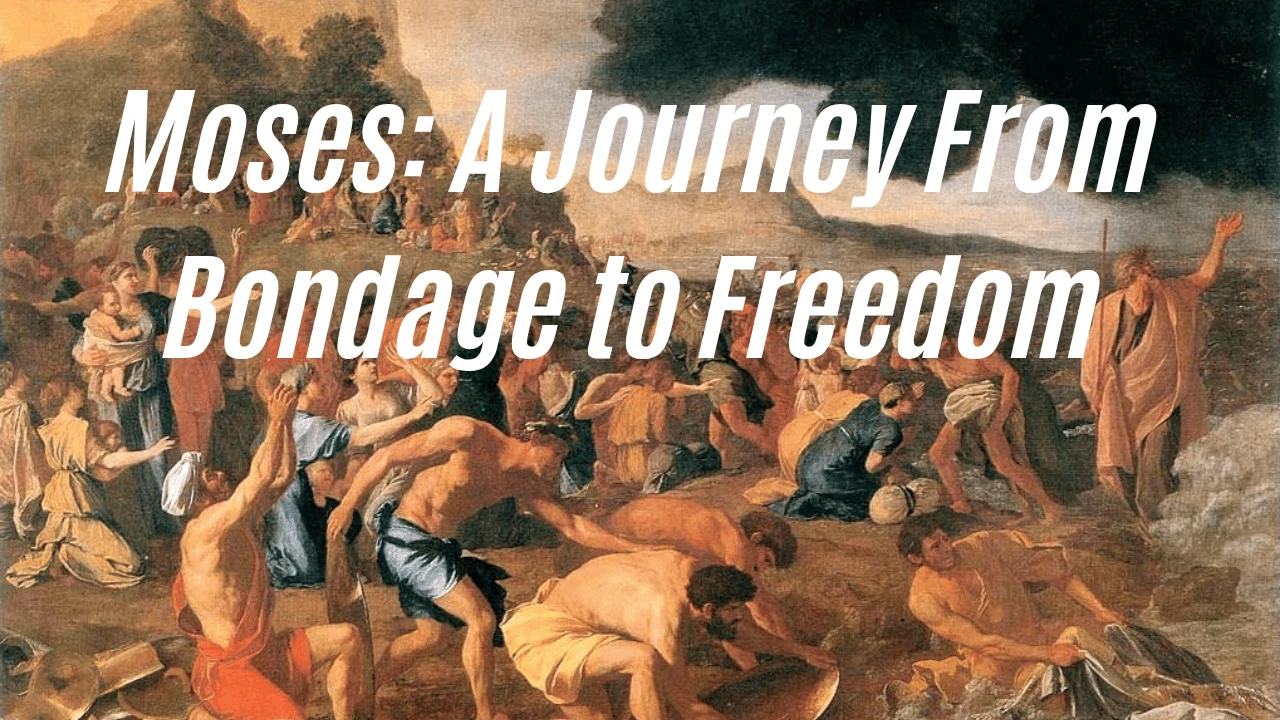
• God prepares us in the wilderness: Saved from death as a baby and raised in Egypt’s royalty, Moses fled to the desert of Midian after attempting to force deliverance in his own strength. In the quiet of the wilderness, God transformed a proud prince into a humble shepherd, proving that God's timing and character development always precede His calling.
• God’s strength is perfect in weakness: At the burning bush, Moses made excuses about his inadequacies. Yet, God’s response was simple: "I will be with you."
• God's Faithfulness outlasts the struggle: Moses faithfully led a stubborn, wandering nation, anchoring his soul in deep intimacy with God. Though his own human frustration kept him from entering the physical Promised Land, his true reward was the face-to-face relationship he shared with the Creator.
Moses’ legacy reminds us that God does not call the equipped; He equips the called.