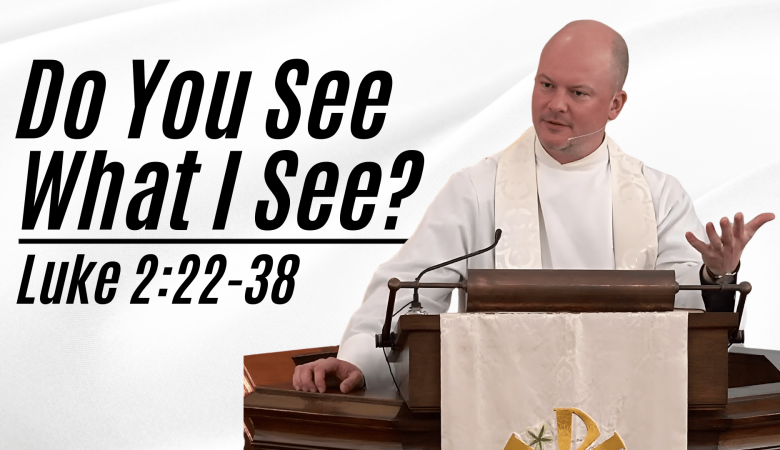
Series: The Coming
Quiet Joseph
December 21, 2025 | Peter Rowan
Summary
Joseph rarely receives attention in Christmas celebrations. Songs commemorate Mary, the shepherds, even Santa's reindeer, but Joseph remains silent and overlooked. Yet in Matthew's account of Jesus' birth, Joseph appears prominently—mentioned seven times by name compared to Mary's four. His quiet, faithful presence teaches something profound about living faithfully with God.
Joseph faced overwhelming calls to unfaithful action. Fear gripped him when he discovered Mary's pregnancy. The woman he trusted most appeared to have betrayed him, leaving him questioning his own judgment and future. Shame threatened to control his response. Society expected him to publicly disgrace Mary, yet he would be called to claim this child as his own, knowing everyone would recognize the baby was conceived before their wedding. The 90-mile journey to Bethlehem—conspicuously without family support—revealed the social isolation they endured.
Fear and shame drive most people into stress-induced reactions. Eighty-seven percent of adults report constant stress, living in a state where the amygdala hijacks clear thinking. This produces defensive, controlling, angry responses or numbing behaviors—essentially unfaithful living.
Joseph chose differently. Called a "righteous man," he refused to play the shame game, protecting Mary's dignity through a quiet divorce. Yet when the angel revealed truth, Joseph acted faithfully despite social consequences. He married Mary, traveled to Bethlehem, and publicly named the child—claiming full fatherly responsibility.
Joseph's faithfulness flowed from understanding two names: Jesus, meaning "God saves," freed him from shame's control. Emmanuel, meaning "God with us," liberated him from fear's grip. Joseph didn't rely on his own strength or succumb to societal pressure. Instead, he embodied quiet confidence, knowing God provided everything needed for obedience.
This same truth offers freedom today: sins don't define us, and God's presence removes all reason for fear. Faithful living emerges not from moralistic striving but from embracing these realities.
Transcript
Father in heaven, we thank you for this text, familiar as it is, that speaks to us, of your grace, to us in Christ Jesus. Jesus, for he will save his people from their sins. And Emmanuel, God with us. Lord, I pray now that you'd unstop our ears, that you would quiet our minds that are often so distracted with so many things that are going on in our lives and the world about us. Give us a heart not of stone, but of flesh. God, do your work in us. We pray in Jesus name. Amen.
Okay, I would guess that at least some of you, maybe it was last year when it came out, but over this last year, have seen Nate Bargazzi's Nashville Christmas Special from last year, Christmas Eve. If you haven't, I would recommend him. He's one of. He's sort of a regular name in the Rowan household. He's pretty clean, which is nice if you got little kids for a comedian.
Anyway, among other things, there is a little skit where Nate plays the angel of the Lord who comes to the Nativity scene. There are Mary and Joseph on either side of a little manger, and on the other side of the stage there's the three wise men. And in walks Nate Bargazzi with this curly wig on and this sort of Romanesque breastplate that is shining gold and a white robe, not too unfamiliar from the one that I have on, and then enormous white wings. And they start to talk about Christmas and how for generations and centuries people will remember that night with things like pine trees, which, of course, Mary and Joseph say, pine trees. Yes, pine trees. And he talks about how they will remember that night with singing songs about the events of that day. Mary responds, songs about Jesus, to which the angel says, a few boring ones. Yes, I love Christmas songs, he says, there will be songs about you, Mary, and songs about you three wise men.
And will there be songs about me, Joseph? Joseph asks. There are going to be lots of songs, the angel replies. So most of them won't be about what's happening here. They will be about snow and snow related activities. But there's no snow here. We are in the desert, says Mary. Right, replies the angel.
But I want you to think about Joseph's question. And there will be songs about me, too, Joseph. I mean, we have songs about the names of Santa's reindeer. We have songs about Santa getting run over by reindeer. We have songs pleading for it to snow. Let it snow, let it snow, let it snow. We have questionable songs about how cold it is outside and how your baby needs to stay in. You Know, but we did not have Joseph songs.
And if I'm actually honest, I was thinking about this. So the texts we just heard are the lectionary texts for the fourth Sunday in Advent for this year. Because we finished up 2 Corinthians last week, and we still had a week left in Advent. I was like, I'll just use the lectionary text. So take the wisdom of the church's lectionary and use that. And it kind of struck me that the lectionary text for the fourth Sunday of Advent this year is actually one of the texts that we often read at Christmas itself. Right. But what struck me, as I was studying for this a couple weeks ago, is just how present Joseph is. Again, I have preached numerous sermons sort of focused on Mary. I have preached sermons on Elizabeth. We have looked together, I think, actually two times over the last 10 years, since this will be my 11th year around Christmas as the pastor here at Second City on the mothers of Jesus in the genealogy in Matthew. So we've looked at Rahab and Ruth and the others there, but I have not preached a text that has focused much on Joseph. And, of course, there's some reasons for this.
You know, Zechariah is present. Simeon gets a song, Mary gets a song. Joseph never talks. Okay, kind of interesting.
But if you look at actually the texts of the incarnation of Christ, primarily, which we find in Luke and Matthew, right. Mary is very present in Luke, and actually Joseph is the one who's most present in this Matthew text. Mary's certainly there, and she's certainly a key figure, but she's mentioned four times by name in chapters one and two, and Joseph is mentioned seven times by name in chapters one and 2. Interestingly, the Magi get a speaking part. You might remember. Where is he who is born king of the Jews? Right. He asks Herod.
And of course, Mary gets her song in Luke, but Joseph never speaks. He's quiet, and yet he's very present. And I think it's in this quiet, faithful presence that we actually have something that we are being taught that's very, very important. But first, I want you to just look with me how present Joseph is. Okay. Because I think Joseph needs his due in some ways this morning. So do you have your Bibles open, hopefully, to Matthew?
This little section on the end of chapter one, after the genealogy that began our chapter. And what you see, he's mentioned by name there in 18, right, when his mother Mary had been betrothed to Joseph, verse 19, and her husband Joseph, and then verse 20 the angel of the Lord appears to him in a dream, saying, joseph, son of David. We could go down verse 21. He's mentioned as his pronoun, she will bear a son. And you, speaking to Joseph, shall call his name Jesus. We go down verse 24. When Joseph awoke from sleep, he did as the angel of the Lord commanded him. He took his wife, verse 25. But he knew her not until she had given birth to a son. And he called his name Jesus.
So every verse except for verses 22 and 23 in this little section mentioned Joseph either by name or by the pronoun. And in his action and his presence is pervasive in this passage. He may be absent in songs. He may be not sort of present with his voice, but he's very, very present in this text. And I think, again, he's teaching us something incredibly important that you find throughout the Bible. But he's showing us. He's showing us the beauty of living a faithful life. Okay? The beauty of living a faithful life with our faithful God. Okay, now here's what I want you to hear.
First, there are all kinds of calls for unfaithful action. There are all kinds of calls for unfaithful action. What do I mean by this? Well, I don't mean that there's part of this passage that is specifically saying, joseph, live in unfaithfulness to God and to those about you. But what I am saying is that in our minds and in our hearts and actually in the world about us, we have all these different calls to unfaithfulness. Okay, Consider this.
What does the angel say to Joseph? What do angels say to people? Don't fear. That's what angels say to people. Don't fear. Do not fear to take Mary as your wife. You remember that this is what the angel said to Mary also, and to the shepherds, which means that they were much scarier than Nate in that costume, right? On some level, it wasn't just the circumstances, but there's something about angels that are probably rather frightening. Okay, but think about this. Fear often can be a call to unfaithful action.
And Joseph had real reasons to fear. He had found out that his fiance, this woman who he had been betrothed to, was expecting a baby. And he knew how babies come into the world. And he knew that he had been faithfully waiting until he and his fiance were husband and wife when they were wed. And so unquestionably, undoubtedly, he must have thought the person who I trust the most in the world, who I was going to unite to for the rest of my life. I can't trust. Who can I trust? Is that not fear inducing? Of course it's fear inducing. He probably actually said, what kind of judgment do I have that I would be engaged be betrothed to somebody that would do such thing? I must not even be clear thinking myself. I thought I was thinking, all right, so he probably lives in some level of fear of his own ability and his own trustworthiness of his own mind and his own thinking.
No doubt he feared what this would mean for his own future life and the future life of this young woman who he was betrothed to. In his commentary on the Gospel of Matthew, Stanley Hauerwas Some of you hopefully are familiar with Hauerwas says Matthew's story of Mary's pregnancy. Sorry, the Matthew story of Mary's pregnancy lacks the charm and detail of Luke's account, but that may be its value. One of the great enemies of the Gospel is sentimentality, and the stories surrounding Joseph or sorry, Jesus birth have proven to be ready material for maudlin sentiment. Matthew's account of Jesus conception and birth is unapologetically realistic, which is to say Joseph is engaging with this scenario that for all kinds of reasons would cause him to fear.
It's unapologetically realistic. Part of the realism of it is that it shows that Joseph says, I've got to act here. I've got to do something, because his fiance is expecting and he knows he isn't the father. No doubt the question swirling around is what will tomorrow bring? What kind of unknown am I living into? What kind of new uncertainty will happen to me after the one thing that I thought would happen for the rest of my life is not going to be happening. The person I thought I knew best, I don't really know fear. What I'm suggesting to you in some ways is fear often calls us to unfaithful action. Living into fear. Okay. Another thing that often calls us into unfaithful action is shame.
Now, the angel says, do not fear. The angel does not say, don't live into shame. But shame is in this passage. We'll look at it again in a second. The passage actually doesn't necessarily mention that Joseph is sort of in this state of shame, but what it does do is it calls Joseph to action in the exact place where shame would cause him to hide. Let me try to explain this. Okay, Joseph, we're at the very end. It says, and he called his name Jesus. Right? She will bear a son, and you shall call his name Jesus. So Joseph is the one that's supposed to name this child. This child who he did not have a part of conceiving. He's supposed to take on the fatherly role of. That would have been the act of the father to do the naming. Related to this role, you might remember that is the presentation of Mary and Joseph, of the child in the temple. We're going to look at that in a couple weeks, actually, as we consider Simeon and Anna. But that would have been a fatherly action and a public fatherly action. Right. So they do that in Luke chapter two. But what this is saying is that the angel is inviting Joseph to take on the fatherly role. So everyone would have. Everyone around them would have known that this baby was conceived before their wedding. Right. I mean, everybody would have known that.
We aren't exactly told how Joseph found out that Mary was with child. But we are told in Luke that when Mary finds out from the angel, she immediately goes to Elizabeth. So it's not like she immediately goes to her fiance and tells him what's going on. She immediately goes and, you know, spends some time with Elizabeth. So it's very, very that Joseph doesn't know that Mary is expecting until she's showing maybe a few months in. We don't really know. We don't know this, but it's very possible. And what's certainly true is that they would have known. Okay, this baby was conceived before you were wed. Mary started to show. This is the time frame.
And Joseph is supposed to act like he is the father. He takes Mary with him down to Bethlehem to be registered for the, for the census. And this is kind of interesting. Unlike in Luke chapter two, when we're told the end of Luke Chapter two is the story of the only story we have of Jesus in his youth and he goes down to celebrate the Passover. And it specifically says that they went down with relatives and friends and stuff. It's interesting that that detail is there in Luke and it's not here in Matthew when they're going down to Bethlehem, which would have actually been, you know, fairly close to Jerusalem. And so the norm would have been if you're traveling a ways, you would travel with other people. Right. Well, how far is it from Nazareth to Bethlehem? Does anyone know this? It's about 90 miles on the trail. It's about 70 miles of the crow flies. It's a 90 mile trek. It's a long walk. It's a long walk when you're nine months pregnant. Do you think you want friends and Relatives helping you out along the way. Yeah, yeah, you would. Where are they? They're probably so unsure of what is happening with this young couple. And how in the world is she pregnant already?
And now Joseph's supposed to own this dynamic, Right? I mean, this. You can see that there's. There's a lot of shame in this social shame in this scenario that could be taking place. And Joseph actually called to live into it. In a way, had they been promiscuous, had they brought shame on their families, that why their family's not there with them? Maybe it took the family a couple years to buy into this whole story of an angel appearing to Mary. Probably not something that's easily believable. Where this little boy had come from, who they finally got around to saying, yeah, we'll travel down south with you to Judea and to Jerusalem. But what I'm suggesting is that shame is often actually a call to unfaithful action. I don't want people talking about me like that. I want to be with this lady. I heard last week that 87% of adults say that they are rather constantly stressed. 87%. And I first heard that and I thought, is that surprising? And I thought, I actually don't think it's terribly surprising. It's that high.
There's a lot of things that can stress us out, right, as adults. Maybe it's like, maybe it's how do I afford life? How do I pay for children? What do I do with my older children that aren't talking to me? And we're estranged and maybe we're worried about aging loved ones. Of course, the unbelievable political polarization, neighbors not talking to each other, friends disowning you because you voted for X, Y, Z, whatever. I mean, there are innumerable sort of reasons why we say we are stressed out, right? What's the. I mean, what's. How are you? The most common response? Well, I guess you could say I'm fine, but most of it's like, I'm busy. We just live busy lives, stressed out lives. Here's the thing, in a state of stress, we are often ruled by just a tiny little part of our brain. And this tiny little part of the brain releases hormones like adrenaline and cortisol, which means we react quickly and emotionally, and we do this to stay alive. This little part of our brain releases these hormones. This little part is the amygdala, as many of you are familiar with. And the interesting thing is that it actually blocks our clear thinking part. Right? Our prefrontal Cortex, that's what's happening, right?
So here's what's happening is that 87% of adults are just reacting. We're just reacting because we want to stay alive, which is called amygdala hijacking, right? It's taking over. And there's a time when this is actually really helpful and good. Okay. And this time is when you're actually needing to stay alive, like truly stay alive. Because what happens in this whole fight flight freeze response, we're seeking to protect ourselves, but oftentimes we're doing that out of this sense that we don't know the whole story. Like we're trying to control, we're trying to figure out how do we stay alive. Actually our bodies react. This is kind of interesting, right? In this state our eyes dilate and we get a tunnel vision. So we literally can't see as clearly. Like literally our eyes get more tunnel vision, our breathing changes, our blood constricts, our blood veins constriction. So we're preserving ourselves for what's going to come, right? And we just live in this state. 87% of adults say this is the state that I'm living in, which means they're not really thinking very clearly.
If you're in real danger, it's very helpful. If you're not, it's actually very destructive. We're mostly living stressed out lives full of fear and shame. And for the most part, these stressed out places of fear and shame are actually calling us to live unfaithful lives. So think about this, right? What do we do? We often live lives very defensively. We're often trying to seek to control our environment, to control those around us, to control our image. What we're often doing is we're demanding that we are in the right. And we get angry when other people want to challenge our thinking or our feeling or whatever. Like, you know, we get this really defensive kind of angry posture towards others. We lash out or often, you know, that's kind of that fight response. Oftentimes we just numb out, right? Football game after football game. You probably know people that want to place bet after bet after play after play on different games. I mean, how good are potato chips? How good is msg? I mean, right? It's delicious. And so we just reach for it because it's like, oh, at least I can have this sense of delight for a little while and sort of check out from the stress around me.
Of course, we are in a world that tells us that the highest good is individual self expression. You do you, you be you is the most important thing which aggravates this idea of self preservation and self delight into the self, right, the self. All this, what I'm suggesting is this place of fear and shame, which is so related to our places of stress, which is so influences our brain, which so influences our body and so influences our community, calls us to a life of unfaithfulness. There are all kinds of calls that Joseph was experiencing socially and probably in his mind and in his body and places of his heart that were calling him to unfaithfulness circumstances he found himself in the hormones pulsing through him, the culture around him. But interestingly, if anything, Joseph is not said to be someone who goes along with this. There's no sense in this passage that Joseph heard these calls and said, okay, I'm going to live in this unfaithfulness. If anything, it's the exact opposite, isn't it, if there's a call to unfaithful action around him.
What we see actually in Joseph is a very faithful man. The descriptor, actually for Joseph in Our text, verse 19, and her husband Joseph being a just man. The descriptor there, just man, is the word dikaios. Most of the time we translate that word, righteous. I mean, if there's one descriptor for Joseph, it's actually not unfaithfulness, it's righteous, just righteousness. Often in the Bible, particularly if you're around Protestant churches, the primary way we use righteousness is like what we do when we confess our sins and we receive the righteousness of God. We're declared righteous before a just God because of the righteousness given to us. But so in the Bible, righteousness often and particularly in Matthew of the Gospels, actually is a reference to right living, to faith, living in light of who God is, in light of who we are. And Joseph here is called a righteous man. Right living in the Bible or right living in the Bible and right faith in the Bible always go together. Faith in what God does and living in light of it. So what do we see in Joseph? First, we see he's not willing to play the shame game. I said we'd come back to this.
But specifically, it actually mentions shame, right? And Joseph's not willing to play it, really. So verse 19. And her husband Joseph, being a just man and unwilling to put her to shame, resolved to divorce her quietly. Now, we think of divorce, of course, in our age as primarily connected to marriage. But we know that they were not yet married because the angel says, do not fear to Take Mary as your wife. What you need to understand is that in the ancient world, engagement was a much weightier thing than it is today. They were bound together, and to break that bond would have been a very significant action. It wasn't quite marriage, but it was sort of more than even sort of engagement in our world. He didn't want to be a part of a corrupt marriage. And actually he had every right to cancel this engagement. Okay. This would not have been something that would have been remotely outside of his right thing to do to cancel this. He could have exposed Mary as an unwed mother to public disgrace. That would have been a norm of his day. And there would have been certain penalties, punishments, rather severe, that would have gone along with that. But he doesn't do any of this.
No. There were better and quieter ways to do this that still sort of preserved some of her dignity. And he sought to do that. Okay, and this is interesting, actually. One thing I read in studying for this is righteousness in Matthew particularly, is often connected to this idea of showing, treating other people with dignity. So righteousness often is actually combating shame in Matthew. It's kind of interesting. Joseph lives into this kind of righteousness, into this faithful action, because he's unwilling to play the shame game, which he totally could have played and which would have been the norm of his day. But the other thing here, and this is kind of interesting, is that Joseph isn't controlled by fear. So the angel does speak to the place of his fear. Right. The angel doesn't just go, oh, it's okay, something else is going on here and you should still marry her. The angel does actually say, hey, this child was conceived by the Holy Spirit. So he actually addresses the place of his questioning and his fear.
Mary had been pure. Which is to say the angel does say, mary has been pure. She's been holy. She's been faithful to you as you had hoped. Right. But he also doesn't allow the social fear, which he no doubt would have known and felt, as we all do, to run his life. So despite what others may say or do, despite how others may not join them in the journey, may not, you know, throw the baby shower and all the rest. He takes Mary as his wife and he takes her down to Bethlehem and he names that child, as he would have done if he were the biological father. He owns this place of fear and he acts faithfully within it.
Okay, but here's. So here's the interesting thing, and I hope this is kind of where you're going, how do we do this? How do we not live into the shame game? And how do we not live into fear? I mean, seriously, if 87% of adults are just living out of stress, probably a lot of us are doing that, and probably a lot of that stress is related to the idea of fear and shame. So what do we do? Just what's the answer? How do we actually kind of live like Joseph here? Right? How do we learn? How do we not just live stressed out and angry and controlling and vindictive and numbing lives? Because we all know that that's the norm. We all know that that's mostly what people are telling you to do, right? Live angry. How do we do this?
Well, if you've been around religious folk, not just Christians, but Christians too, maybe you've heard things like dare to be a Daniel and be brave like David and maybe you've heard a sermon. I really haven't because I haven't heard sermons about Joseph. Be just like Joseph. Joseph. The. Just that. Maybe the answer is just to put these figures before you and live into their kind of way of being. But that's a moralism, right? It's a moralism. And moralism leads you to pride, which leads you to look down on others, which does not help the world. So what do we learn from this text?
Well, one thing, and I actually didn't know Dave was going to mention this because he was doing this devotional. He says there's the names in this passage. Yes. There's two names that are highlighted for us and both names are given actually their meaning. It's an interesting little detail here in Matthew. First, Jesus. Look at verse 21, the angel speaking to Joseph. She will bear a son and you shall call his name Jesus, for he will save his people from their sins. Jesus is in Greek, the Hebrew name Joshua. Yeshua, God saves. But Matthew translates it for us in a way. He says this is why, because he's going to save his people from their sins. Now, we think we have done bad things. We have. We all have. That's why we confess our sins. We've done bad things, and so I am bad. You have done bad things and so you are bad. Right? This is what this is. You know, you go back to the garden. Adam and Eve go against what God has called them to do. And what they say is their sin invites them into a place of shame. And so they have to cover themselves. I don't want you to see me. Right?
That's what we do with our sin. We say, not just that, I have Done bad, but I absolutely am bad. Not just guilty, but full of shame. And Jesus name alone says, I am doing away with that. I'm doing away with it. The thing that you want to hide, the thing that you want that causes you to want to lash out at others or just numb the stuff you don't want to deal with, I'm doing away with that. Places of shame don't have control over us as we honestly bring them to the Lord and we truly receive that he is Jesus, the Joshua, the God saver Savior that comes from God to redeem his people from their sins. But the second one, right, is this title Emmanuel, this other name, verse 23. Behold, a virgin shall conceive and bear a son, and they shall call his name, right? 21 said, you shall call his name. And this says, they shall call his name Emmanuel. And then Matthew says, which means God with us.
Our fear, you know, which is what causes us often to fight back or actually just sometimes to freeze or to run, hightail it out of here, is often related to our inability. We want to try to control things, or we go, actually, I can't. I got to run. But what this says is, God is with us. And if God is for you, who can be against you? It's the God who spoke the world into being is with you. Brothers, you have no reason to fear. That's the constant message of the Bible. If God is with you, you can go out to the world. Not a confidence of your own, not a demanding that others follow you or be controlled by you, but with a quiet confidence saying, whatever God calls me to do, he will give me the resources to do, the time to do it, the energy to do it, the ability. There is a rest and a quiet presence that Joseph embodies because he knows that God is both Jesus and Emmanuel, saves him from his sins, is present to him in his fear.
Let me end by returning to Nate Bargazzi's Nashville Christmas Nativity, which half of you will watch this afternoon. So he's telling Mary and Joseph and the Magi all about, you know, the stuff that we do to commemorate the great gift of God for the people of God in the incarnation. And so he talks about, like, yule logs, which of course, they're like, what's that? But the question is, what does that mean? And of course, in Nate Bargazzi's way, he says, who knows? And anyway, one of the wise men being wise says, none of what you're describing feels connected to Jesus. These celebrations do not just honor Jesus, Nate Says they honor the almighty being that resides on the top of the world, God. The Magi responds. Nate says no. Santa Claus.
Who is Santa Claus? Santa Claus is a bearded all seeing mortal who sorts the righteous from the wicked. But isn't that what God does? Yes, but Santa does it to children, Only children.
It's funny, but it's also revealing because it's so confusing, isn't it? It's so confusing. And let me leave you with this idea. If Joseph confused who God was, if Joseph confused himself with God, as we are so often told to do, you get to decide what is right and wrong. You get to decide your life. If he would have put himself in place as his only savior, right, as the one who has to deal with his shame, as the one who must control because life is a scary place, this would not have gone well, would have been a wreck. If he would have just thought of God like a cosmic Santa Claus or a cosmic elf on the shelf, then he would have only continued on into the long cycles of fear and shame like so many of us do.
But instead he was invited into this life of peace and rest and quiet presence because he learned that God is Jesus. Not the one who is just sitting on top of the world bearded, making his list of oh, did Joseph do right or wrong? But instead he's the one who comes to save his people from their sin and the God who does not stand far off. But is God with us? Emmanuel, brothers and sisters, this is. This is the answer to us. Not just living reactive lives, but being entered, being able to enter into the places that we most fear with a quiet, faithful presence. The answer is that God is Jesus. Your sins don't define you. And God is Emmanuel. He is with you.
Amen. Let me pray. Lord, pray that we would know these truths. That we would know you, that we would know your presence with us, that you would lead us and guide us in the way of faithfulness to you and life for others. God, that we would not just live out of what we are so inclined to do, which is to shame others, to lift ourselves up towards self protection, towards control, animosity towards others. God, heal us of this and heal us of this with this message that you proclaim in this season, that you are Jesus, the God who saves, that our sins not define us. They are washed, we are washed clean, they are removed from us as far as the east is from the west. And that you are Emmanuel, that you actually desire us, that you long to be with us and to lead us, that whatever may come Neither height nor depth, angels, nor demons, nor anything else in all of creation can separate us from your love. And there is nothing to fear. God, I pray that, like Joseph, you would give us this quiet, faithful confidence. Because this is who you are. Our Savior, our Lord, our friend, our Jesus, our Emmanuel. Amen.
Series Information

Born to a virgin.
Announced by angels.
Pursued by the government.
The subject of prophesies centuries before.
Beneficiary of royal gifts.
Born among barn animals.
There is nothing normal about Jesus' birth.
Believe it or not, this birth still fascinates us.
It should.