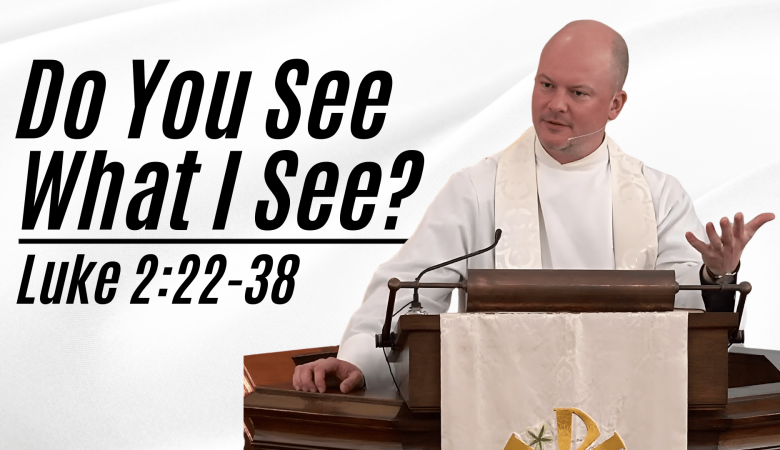
Series: The Coming
Do You Hear What I Hear
December 28, 2025 | Peter Rowan
Summary
Zechariah's story in Luke 1 reveals how God responds to our long-held prayers and seemingly impossible situations. As an elderly priest, Zechariah finally received his once-in-a-lifetime opportunity to burn incense in the temple, bringing both the people's prayers and his own deepest longings before God. When the angel Gabriel announced that his barren wife Elizabeth would bear a son, Zechariah doubted because the promise seemed impossible. Yet God specializes in working through impossible circumstances, as seen throughout biblical history with Sarah, Rebecca, Rachel, and others. God's ears are always open to our cries, even when His timing differs from our expectations, and He delights in turning the impossible into reality.
Transcript
Lord God, I pray that as was our Lord's custom to go into your house on your day, Lord, it is ours. And God, I pray this morning that as you met the prayers of the people long ago in Zechariah and Elizabeth's prayers, as you met with Zachariah long ago in your house, Lord, I pray that you would meet with us again today, Lord. No doubt, Lord. Some of us have had joy filled weeks and others of us have been reminded of the brokenness of life. And some of us have faith that feels like it could move mountains this morning.
And others of us now the doubt looms large and some of us are convinced of who you are and others are unconvinced. Lord God, would you open our ears? Would you hear our cries? Would you meet us now? In your name we pray.
Amen.
So last Sunday we looked at Joseph and we learned a few different things about quiet Joseph, his quiet faithfulness. And today we're going to look at another father figure in in the early narratives of the Gospels, right before Jesus is born. Zechariah and I mentioned last week how Joseph, as Nate Bargatz pointed out, doesn't really get songs. He doesn't get songs in the text. We don't really have songs of Joseph so much in our church history.
And Zechariah doesn't have a song in the text. Next week we're going to look at Simeon. We often sing the song of Simeon at the end of the day of our services in this season. We're going to look at him next week. But there is a great song about Zechariah in an album that came out about 10 years ago by a group called Rain for Roots.
Children, maybe you know this song. Adults, maybe parents especially, you know this song. We have played it lots of times in the car rides on in our family. The best part is the chorus, but I'm going to read to you the first verse in the course. So the first verse recounts for us some of this story that we just heard in Luke chapter one about Zachariah.
It says, Zechariah went into the temple and an angel of the Lord was waiting there. He said, you've waited your whole life. Good news. You and your wife will have a son named John. The Lord has heard your prayer.
Zachariah was afraid and started talking. He said, how can this be? How will I know? Gabriel said, God gave this special task to me, and since you ask, here's a sign for you until he's born to show. And Zachariah said, Then he couldn't say, but his heart went.
Then he tried to say, but he couldn't say, but his heart went boom, boom, boom. I mean, Zechariah couldn't believe what he heard. And therefore, when he went out, I actually love it too, because you really get this sense that he was playing charades with the people, right? He didn't know American Sign Language back then. He goes out, right?
He's supposed to bless the people, and they couldn't hear the good news that he had been given. And part of the question is, do you hear? Right? Do you hear what I hear? Can you hear it?
I want us to look at this text this morning, really focusing on Zechariah. There's a lot that we could talk about in this passage. Okay? I actually looked back, preached this passage to you years ago. But we focus there mostly on John.
But I want us to consider Zechariah, and I want us to consider his improbable opportunity. The unbelievable announcement and then the idea of open ears and open mouths. Okay? So first, just the idea of improbable opportunity. So if you have that text open before you, Luke, chapter one, verse five begins with in the days of King Herod, King of Judah.
And this is actually kind of common with Luke. He sets this historical context and he gives you this big picture of what's happening. But it's almost as though Herod is sort of this other figure that's there, but he's not the main figure. Luke actually does this quite a bit. He highlights for us the people that we would sort of push to the side the overlooked.
And so it moves on quickly. There was a priest named Zechariah. And then it highlights this little detail for us of the division of Abijah. And part of what Luke is doing right here, right at the beginning by mentioning the divisions, is he's highlighting for you the improbability of what's taking place, the improbability of this opportunity. Right?
So here's what's going on. Every direct descendant of Aaron, right? Aaron was the brother of Moses. He was the original high priest. Every direct descendant of Aaron was automatically a priest.
And therefore they were to serve in the temple. And there were so many priests by the time of David that David broke them into 24 different divisions. Actually, it's kind of interesting that when the exiles came back from the Babylonian captivity, there were still so many priests that even though only four of those divisions came back at that time, they were again broken up into their 24 divisions with the Same names. Well, the division of Abijah was the eighth division. And it's estimated that around the time of this taking place, there were about 20,000 descendants of Aaron, 20,000 priests.
And so what would happen is that each division would get one week, sort of every six months, ish, two weeks a year to come and to serve in the temple. So you can imagine if there's 24 divisions, there's about 20,000 priests, there's about 850 people per division, okay? And so, you know, there's no need for 850 people to come and serve in these different ways. And so what it meant was that you would have your name drawn by Lot. It actually mentioned that there that his name was drawn by Lot.
It was sort of a by chance. And you could do different acts of service sort of in the temple. But there was one act of service that was so unique and so highlighted and so respected and so desired that you only got to do that one act once in your life. And that one act was to go actually to be the one to go into the temple and to burn the incense that was a symbol of the prayers of the people going up to God. I don't know if you notice this.
It's actually, it's highlighted that is referenced. The incense is referenced for us three times in this text, verses 9, 10, and 11. It's as though it's highlighting for us. This is a big deal. This is the thing that any descendant of Aaron would have spent their life desiring to do, and not all would have been allowed to do it.
You would have had one opportunity to do this in your life. And Zechariah, we are told in verse seven actually, and again in verse 18 was advanced in years. So he'd waited his whole life. He'd waited his whole life to come in and to do this, to offer the prayers of the people, but also to offer his own prayers there in the midst of the temple. All this is to say that it was an entirely improbable opportunity and he's going to make the most of it, as we all would.
So he not only brings, of course, the prayers of the people through the symbol of the incense, but he brings his own lifelong sorrow that he's carrying his own desire for God to hear him, to be attentive to him, to understand what he and his wife have been going through. So just think of this for a moment with me. What prayer would you bring?
I mean, almost certainly the one time he gets to go into the temple, you'd bring the long prayers, right? The prayers that you've prayed again and again and again.
Likely you would maybe bring the prayers that you had grown to doubt would ever be answered, the prayers that you'd cried out to God to hear time and again. Maybe the thorns in your flesh, as we just heard right, in 2 Corinthians, Paul, have he cried out to the Lord to take from him that kind of prayer?
Maybe you've prayed some prayers so much that you think that actually the opportunity to offer them one more time might just be futile, right? But here we read that Zechariah and his wife were righteous before God, and they were walking blamelessly in his commandments and his statutes, which is to say, they were trusting in the Lord, they were righteous. They were trusting in God's promises to them, his work on their behalf. And their life reflected this. And so they held out hope, the act of God on their behalf.
But think with me also about the prayers of Zechariah and the people. Okay, so I've mentioned this, right? As the priest and as his name was drawn by Lot, he would have gone into the temple there and he would have offered the prayers of God's people. And no doubt the dominant prayer of God's people at that time and actually kind of throughout history would have been for deliverance, deliver them.
It's mentioned again right there in verse five. In the days of when King Herod was over Judea, right? Herod was a Roman. He wasn't the king the Israelites wanted. He wasn't the king that God had promised to them, right?
A king in the lineage of David that would sit on the throne with justice and righteousness.
All of them had read the Old Testament promises of God's purposes to bless them and to bless the world through them.
In. In a sense, no doubt they believed that God's presence was with them. They were showing up to the temple to offer their prayers. It says that the people were praying outside.
But their faith was constantly put to the test, maybe like. Like yours is. And the situation which they found themselves and said, what is God doing? We've cried out for deliverance time and time again. Can he hear us?
Their faith was constantly battered by the fact that evil seems more active in the world and frankly, more effective in the world than the power of God at times. There is no question that. That that fact shook them just as it shakes you and I. For all the glad tidings and great joy that we proclaim and we hopefully live into in this season, we collectively and we individually actually have these long prayers that we pray again and again and again. Again.
Think about this. One of the last prophecies that we have recorded for us in holy scriptures coming from the book of Malachi. And one of those prophecies says the Lord whom they seek would suddenly come to his temple, right? And then connected with this is that there would be a prophet, like the prophet Elijah.
They would come and bring a season of great repentance. But that, I mean, that was written over 400 years earlier. To give you a reference. It's like talking about something that was said to the pilgrims long ago.
I mean, how long had they prayed that? How long had they hoped that?
And that's just the collective prayer. But think. Think about how long Zechariah and Elizabeth had brought their individual prayers before the Lord. So not only was this, like an improbable opportunity that Zechariah has near the end of his life, he's advanced in years. He finally has his name drawn, and he's going to make the best of it.
But he goes before he goes in there and he offers the incense symbolizing the prayers of his people. And undoubtedly he offers his own prayers. In fact, we have a good sense that he did because of what the angel says, right? He's saying, this is my improbable opportunity. I'm going to make the best of it.
But what he hears, what I want to suggest to you, what he hears is actually an unbelievable announcement. And we know that because that's his response. This is unbelievable. It's an unbelievable announcement. So again, the communal life of God's people was one of tragedy.
It was going from. Think about this, okay, let's just go back the last, like, thousand years. We could go back farther and actually illustrate this. But if you just go back last thousand years of Israel's history, you have a divided kingdom after King Solomon. After that, you have just a wreck of different kings between the northern kings and the southern kings.
You have a lot of rebellion against go. And then the Assyrians come in and they take away the 10 northern tribes. And then a couple centuries later, well, about 150 years later, the Babylonians come in, they take away the southern tribes. After that, there's the Persian domination. After that, there's the ravages by Antiochus Epiphanies.
And now they're under Roman rule. I mean, literally, it's just tragedy upon tragedy upon tragedy that's taking place. And people are crying out for God to do something. He has said time and again. That he would act.
He would act on their behalf. And they're desiring that.
And it's almost like after that long, they're like, I don't know about this faith thing. Sort of unbelievable. But interestingly, the angel does not first speak to the collective prayers that are symbolized by the incense. Instead, he first speaks to the prayers of Zachariah when he's there. Now, the.
The first thing that the angel spoke to was the prayer of Zachariah and his. His wife, which I want to also suggest to you is an unbelievable announcement. Why is this?
Elizabeth was not a spring chicken, actually. Again, verse seven and 18, both say that they were advanced in years. She had been post menopausal for a long time.
Their life together had been overshadowed by tragedy, just as their communal life within Israel was overshadowed by tragedy.
For a Jewish couple, for a Jewish woman to not have a child was not only a source of sorrow for them, but actually collectively, it was sort of an issue of reproach. It was sort of a communal reproach. It was oftentimes considered a symbol of God's lack of care for you, his lack of attentiveness to you. So they had cried out, cried out year after year, seemingly heard little to nothing. Personal grief was one thing, communal reproach was another that just added to the sorrow.
Here's what I'm saying. Is it any wonder that Zachariah found this good news an unbelievable announcement? I mean, literally just not very believable, right? Too good to be true. Was it any wonder that he found his answered prayer hard to believe?
You're to have a child, he's told, and he will be in the spirit and the power of Elijah. God, hearing the communal prayers of his people and the individual prayers of he and Elizabeth. Long, long prayers answered. Think of this again, okay? You've been waiting 400 years for the prophets prophecies to come true.
And you've spent your entire married life, no doubt, many, many nights, flooding your pillow with tears. And you have this one opportunity to go into the temple, and there you start hearing things. That's exactly what you're going to be thinking. I'm hearing stuff. This is a figment of my imagination.
I've started seeing things in my old age. My body and my brain are not working properly. Things like that, right? The day has come. He's waited his whole life to enter into the temple, to offer incense, and an angel appears to him.
And he's like, man, this incense is some strong stuff. I don't know what's happening here, right? This must be a figment of my imagination. And so Zacharias says, how shall I know?
And I mean, it's true. The angel says, how? This is an actual. This is a question of unbelief. But what I'm suggesting too is, isn't this exactly what we'd be doing?
I mean, it's not that divorced from our own experiences with God. Zechariah couldn't believe what he heard. It was an unbelievable announcement. But it's true. Asking for signs in the Bible is often a show, a demonstration of a lack of faith.
And why is this? Well, George Caird, the great British New Testament scholar, said, certainty, which leaves no room for doubt, incidentally, leaves no room for faith. That a great quote. Let me read that again for you. Certainty, which is what he was wanting.
Give me some certainty about this, because I don't think this is very believable. Certainty, which leaves no room for doubt, incidentally, leaves no room for faith.
Caird goes on. He says, the quest for infallibility is always an illegitimate one. Zachariah said, this isn't believable.
Answer all my doubts.
Zechariah wanted certainty. God wants his faith. Zechariah found himself in an improbable opportunity, wanted to make the most of it, and then he received an unbelievable announcement. Finally, I want us to consider the idea here in this text of open ears and open mouths, okay? And here's what I want you to see, is that in the midst of this improbable opportunity and this unbelievable announcement in this place where the prayers have been long prayed and it's seemingly unanswered, who listens?
Well, we have some people that don't listen to. I mean, they just literally can't. There's all the people outside, right? He exits. He exits the temple and he starts motioning.
So people aren't the ones that are hearing. The one who is hearing, actually that's highlighted for us in the passage, is God. The open ears are the Lord's right? The Lord has heard your prayer. Do not fear Zechariah, for your prayer has been heard.
Open ears are God's now. Zechariah knew the ways of the Lord. We were told that he walked in the statutes and commandments of God.
And he probably knew the Scriptures well. He probably knew that God often does his most impressive work in the context of the impossible, because that just seems to be the way of God working in the midst of the impossible. Show his power and his glory, and yet he doesn't have ears, really, to hear the angel so much. He says, how can this be? But God has ears.
But think with me. Think with me of this fact of God often doing his most impressive work in the context of the impossible. Just with regards to barrenness. Okay, there's almost this thought that, like, Zechariah should have been like, oh, yeah, this is how you work.
That wasn't his response. But think with me. Sarah, Abraham's wife. Anybody. How old was Sarah when she conceived and bore Isaac?
Pretty old. It's pretty old. Rebecca. She waited 20 years before she gave birth to Jacob and Esau. Rachel was childless until at last Joseph was born to her.
Right. Waiting a long time in Judges 13, we could read about Samson's mother. Manoah was barren until she gave birth to Samson. Think about this. Ruth was married, wasn't she?
Ruth was married, that's a big part of her story, to a first husband, didn't have any children. She had to wait a long time. She was married finally to Boaz. And then they had Obed. Right Then from Obed came King David.
But here's the thing. What you find in the Bible is again and again and again, God seems to show his possibility in the midst of what seems utterly impossible. And so verse 13 tells us, your prayers have been heard. God has open ears in the midst of the impossible. That's what Zechariah heard.
And some of. I wanted to invite you into that. Do you have ears to hear? To hear what I hear? Do you hear what I hear?
I mean, if anything, this is the announcement of Christmas. God doing what is utterly impossible for us. The unbelievable coming into reality. God hearing the long cries of his people, as he did long ago in Egypt when they were crying out to him and sending a deliverer himself in the flesh. God in the flesh.
He does his most impressive work in the midst of the impossible. God giving his own son the prayers of his people. Long, long prayers of his people going up, ascending to him. And he hears, God has open ears.
Think about this. If Zechariah had two great hopes in his life as a priest. First they were to go into the temple to burn the incense. That was the great thing that you were only allowed to do once because there were so many priests. And that would have been the highlight of his career.
And then the other thing was not just to go into the temple, but to go out from the temple. And it was that priest's job to declare the Aaronic blessing over God's people so that he would have had Two functions. When his name was drawn by Lot, he would have gone and offered the incense and he would have come out and he would have blessed the people of God.
But when he exited that temple, like I said, he had to play charades with the people. Not sure how you do that. Guess he just went like this.
Do you know what I'm saying? Some of you know what I'm saying? Lord bless you and keep you and make his face shine upon you. Right? That's what he would have said, but that's what he would have done.
He would have just gone out, right? And they didn't have ears to hear. But the wonder of wonders is that God had the ears to hear their cries that went up and his blessing was for them in the midst of that. And here's a wild thing that if we jump down the chapter, we didn't read this part, but we jump down the chapter to when John is born. The first words that come out of Zechariah's mouth are words of blessing.
And they're not just words of blessing to the people. What it says is, he blessed God because God had the ears to hear the long prayers of his people. Verse 64 says, Then immediately his mouth was open and his tongue loosed and he spoke blessing God. He was to speak the blessing of God to the people. But he must speak blessing to God first because his ears were open and attentive to the cries of his people.
What we learned from Zachariah is that often God does His greatest work of blessing in our long waiting. His most impressive work is through the impossible. His most positive work often comes in negative. Let me tell you a little story I read this week. In 1930s, there was a 15 year old.
I thought of this illustration with little Will Danowski in mind. I'll have to tell it to him later since they're not here. But there's a 15 year old who went to try out for the St. Louis Cardinals. 15 year old, his name was Pete Reisner. I wonder if his middle name was James because then he would have my initials.
And he went to the tryout camp where there's all these scouts and all these other people trying out and.
And the ones that did well, they were asked to come back. And the ones that didn't do so well, they were cut. And Pete Reisner wasn't asked to come back. And so of course he went home dejected and discouraged. And my guess is that he's 15 years old.
He's like, this is an improbable. Opportunity. Anyway, I wasn't expecting this unbelievable announcement that I wanted it.
He gave it his best shot, right? Well, a couple days later, this big Buick pulls up in front of his parents home, and it's the head scout for the Cardinals. And they come in and they ask him, hey, we want you to play for us. And the father's like, what are you doing? Why did you cut my son?
He's at the worst days of his life. He said, we actually cut him because we didn't want the other scouts to see how good he was. We wanted to send him home right away so he didn't show up and show off the next few days and get chosen by some other team.
Often the positive does come out as a negative.
Friends, if Christmas, if the season that we're in, when we're lighting all these candles and basking in the goodness and grace of God for us, if it means anything, it means that God has answered our prayers, that the improbable has happened, that the unbelievable announcement is actually true, that there's a king that's different than King Herod, who sits on the throne, the Prince of Peace, the everlasting God. Wonderful counselor, right? King of David, seated on the throne. He knows our long sorrows. He hears your prayers.
They do not go unheeded by our Lord.
He comes among us and he comes for us. He comes to heal the wounds of our world. He comes to take away our sin.
Do you hear when I hear? Do you hear what Zechariah heard? God is still listening, still attentive to his people, to their cries. He answers our prayers sometimes in improbable and for us untimely ways, maybe, but he hears our long prayers, and he has heard our long prayers. So the verse right after Zechariah has his mouth restored, when he finally actually has his mouth back and he blesses God, the verse right after that says this.
And all these things were talked about through all the hill country of Judea. So, Zachariah, Zechariah's prayers are answered and he blesses God. But it's a communal idea, too. It's for all the people of God together to hear the good news. God has not forgotten you.
He's come among you. And our response is to bless his name. Amen.
Lord God, we're thankful for this story of Zechariah. I'm thankful for songs that we can laugh about where he's muted. But, Lord, I'm thankful that his experiences, that your scriptures don't describe something that is so foreign to us that we so often wait for a long time, like Zechariah and Elizabeth did. We often hear your words to us and we think, how unbelievable. Give me a sign.
But God, your promises are always true. Your yeses are yes in Christ the unbelievable happens in the God man, God taking on flesh and dwelling among us. And for us. God, I pray that we would receive that news of Christmas this morning. Christ for us.
Christ in the flesh, Christ on the cross, Christ through the empty tomb. For us the unbelievable happens, the greatest possible positive happens and the greatest possible negative. That Christ the God man comes for us. God, I pray that just as your ears are open to us, therefore our mouths would be loosened for you and we would praise you and we would speak of you and the songs that we sing in this season, joyfully and willingly. Songs of the wonder, glory in excelsis Deo, the glory of the heavens coming down.
The person and work of Christ Lord, would be on our lips gladly and willingly and joyfully. Or do this work in us remind us of your faithfulness to us?
How do we wonder at your ways and gladly sing your praise in Jesus name, Amen.
Series Information

Born to a virgin.
Announced by angels.
Pursued by the government.
The subject of prophesies centuries before.
Beneficiary of royal gifts.
Born among barn animals.
There is nothing normal about Jesus' birth.
Believe it or not, this birth still fascinates us.
It should.